How to Make AI-Generated Text Undetectable by Detectors
Explore techniques and tools to remove AI watermarks and artifacts for more natural, human-like text.
AI-generated text has rapidly become mainstream, powering everything from academic essays to corporate communications. As the use of AI writing assistants grows, so does the scrutiny from AI detection systems, educational institutions, and content publishers. These systems are designed to identify patterns, watermarks, and metadata that reveal whether content originated from an AI model. For professionals, students, and content creators, understanding how to make AI-generated text indistinguishable from human writing is increasingly valuable—both for compliance and for maintaining your unique voice.
Table of Contents
- The Rise of AI-Generated Text and Detection Tools
- Why AI Detectors Succeed: Watermarks and Artifacts
- Strategies for Undetectable AI Content
- Essential Tools for Cleaning AI Text
- Frequently Asked Questions
- Conclusion
The Rise of AI-Generated Text and Detection Tools
AI’s transformation of the written word has led to an intricate cat-and-mouse dynamic. As AI models become more advanced at mimicking human prose, AI detectors are equally evolving to spot subtle cues left behind by machines. Whether you’re leveraging AI for drafting articles, crafting reports, or assisting with study assignments, you may be unwittingly embedding unique patterns or invisible markers that trip up screening tools.
AI’s Double-Edged Sword: Productivity and Detection
On one hand, AI writing assistants supercharge productivity, creativity, and accessibility. On the other hand, institutions increasingly rely on AI detectors to maintain ethical standards—particularly in academia and journalism. This tension makes it crucial for users to understand not just how AI content is created, but also what makes it detectable.

Why AI Detectors Succeed: Watermarks and Artifacts
At the heart of most AI detection systems lie two key telltale signs: statistical watermarks and invisible artifacts.
Statistical Watermarks
Large AI models may embed statistical signatures—repetitive phrasing, predictable structures, or specific word patterns—either intentionally or as a byproduct of their training data. Detection algorithms scrutinize these features, scoring the likelihood text was AI-authored.
Invisible Characters and Hidden Metadata
In addition to stylistic markers, some AI systems or content pipelines may leave behind hidden metadata, zero-width characters, or even Unicode obfuscations. Advanced detectors extend their analysis to these hidden elements, further increasing the risk of false positives for legitimate users or flagging AI-generated material where it’s discouraged.
Strategies for Undetectable AI Content
Making AI-generated text appear authentically human is about more than just changing a few words. It requires a combination of techniques and careful review.
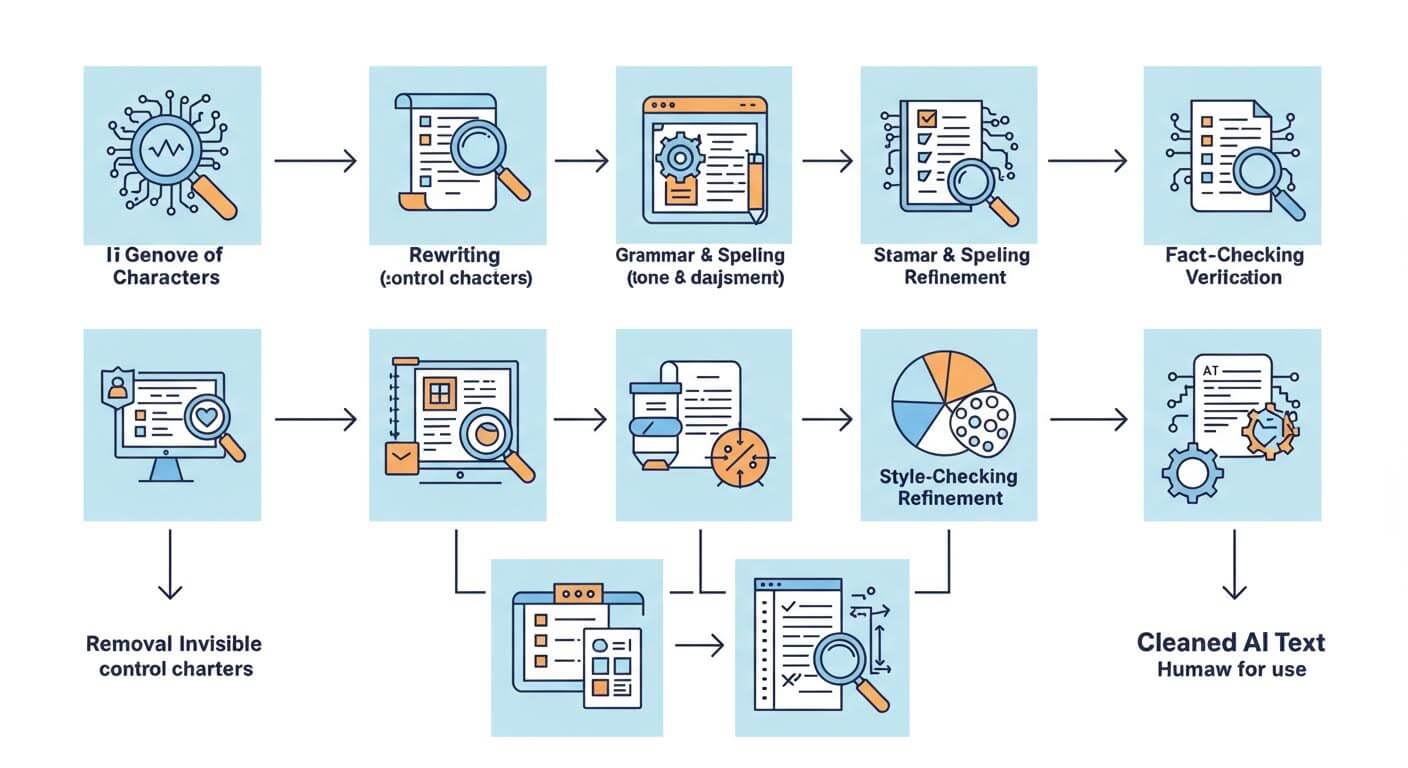
1. Remove AI Watermarks
Use specialized tools that specifically target and strip statistical patterns left behind by popular AI models. These tools often break up or rephrase typical AI phrasing and sentence structures, reducing the likelihood of triggering AI detectors.
2. Eliminate Invisible Characters
Zero-width spaces, hidden Unicode characters, and metadata should be purged, preferably with a deep text scanner. This both cleans up your text and ensures it is free from non-obvious AI fingerprints.
3. Refine for Human Style
After technical cleaning, review your text for unnatural rhythm or tone. Adding personalized examples, varied sentence lengths, and colloquial expressions can further distance your writing from common AI patterns.
Essential Tools for Cleaning AI Text
Staying ahead in the detection game requires reliable tools. Some of the most effective resources include:
- AI Text Cleaners: Online utilities that neutralize watermarks and invisible artifacts efficiently, such as Clean Paste (cleanpaste.org/ai-text-cleaner).
- Grammar Checkers and Rewriters: Platforms like Grammarly or Quillbot can inject more personality and correct robotic phrasing.
- Invisible Character Scanners: Utilities that reveal and remove non-printing text elements.
Using these tools in combination maximizes the likelihood your AI-influenced text mirrors human output without leaving behind incriminating evidence.
Frequently Asked Questions
Why should I care about AI watermarks or detection?
Unintentional AI markers may lead to content being flagged as inauthentic, potentially causing academic or professional credibility issues.
Is removing AI watermarks ethical?
The ethics largely depend on context. It is typically permissible for legitimate editing, while deceptive use (plagiarism, policy evasion) is discouraged or prohibited.
Can all detectors be fooled?
No tool is perfect. The combination of multiple cleaning strategies and human review gives the best results.
Will cleaning AI text change its meaning?
Quality tools strive to maintain intent and clarity, but manual review is always recommended after major alterations.
Conclusion
As AI writing tools become everyday companions, understanding how to retain your authenticity and navigate detector scrutiny is essential. By demystifying statistical watermarks and invisible artifacts—and applying specialist cleaning strategies—you can ensure your writing remains both effective and adaptable to any context. If you’re looking for a streamlined solution, consider exploring dedicated AI text cleaners like Clean Paste for efficient removal of watermarks and metadata.